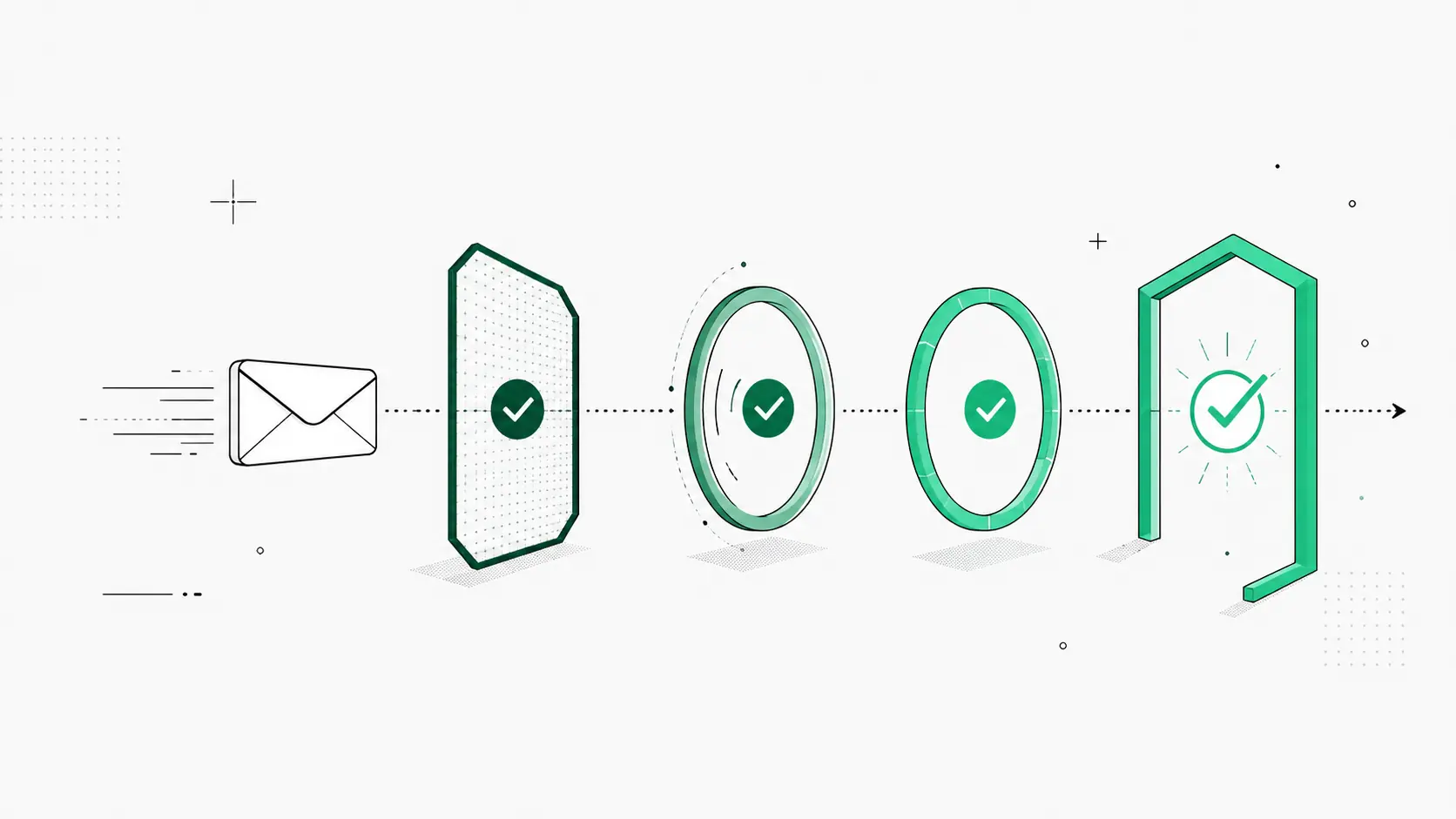
A rep spends four minutes writing a cold email, thirty seconds skimming it for typos, and hits send. That's the QA process at most B2B sales orgs, and it's a big part of why average reply rates sit in the 3-5% range. The teams pulling meaningfully higher numbers aren't writing better prose. They're running every draft through a handful of checks before it goes out, and the checks are more mechanical than most reps expect.
Here's what the data actually says works, and what a pre-send QA process should be checking for.
Length: shorter beats longer, reliably
Overloop's analysis of 1.2 million cold email sequences found that messages in the 50-125 word range outperform everything else, landing around an 8.2% reply rate. That's not a small edge. It also found that roughly 70% of all replies come from follow-up touches, not the first email in a sequence, which means a QA process that only reviews the opener and ignores the rest of the cadence is checking the wrong thing most of the time.
The practical implication: if a draft runs past 150 words, that's a QA flag on its own, before anyone even reads what it says. And QA has to look at the full sequence, not just touch one.
Score-based grading has a real, if uneven, payoff
Lavender's benchmark analysis of 231,818 cold emails found that pushing a draft up to an "A" grade (90+) on its quality model produces meaningful reply-rate gains, and the size of the gain varies a lot by who's receiving it. Lavender's own data shows the lift running as high as 58% for outreach to operations leaders and 79% for finance professionals. Worth being clear about what this is: it's a vendor's benchmark on its own scoring model, not an independent academic study, so treat the exact percentages as directional rather than gospel. But the underlying pattern, that structured, scored review meaningfully beats unscored drafts, shows up consistently enough to build a process around.
CTA framing depends on where the prospect is in the funnel
This is the one most QA checklists get backwards. Gong Labs analyzed 304,174 cold emails and found that in cold, first-touch outreach, interest-based CTAs ("Are you open to exploring how this affects your renewal timeline?") convert to a meeting at a 15% rate. Once a prospect is already in an active deal conversation, the psychology flips: direct, specific-time CTAs ("Are you free Tuesday at 2pm?") pull ahead, converting at 37%, a 2.5x jump over the cold-stage number.
A QA check that treats every CTA the same, or worse, defaults every touch to "grab 15 minutes on my calendar," is leaving conversions on the table at exactly the stage where reps have the least room for error. The fix is simple to implement: gate direct time-asks to sequences targeting active pipeline, and keep first-touch CTAs low-commitment.
Personalization has to go past the merge field
Backlinko's analysis of 12 million outreach emails found personalized subject lines lift response rates by 30.5% and personalized message bodies by 32.7%, against an average baseline reply rate of 8.5% across all the outreach studied. That's a real gap, and it's worth noting the baseline itself (8.5%) is already healthier than the 3-5% range most teams report, which suggests the sample skews toward senders who were already doing outreach reasonably well. The takeaway for QA: a {First_Name} token isn't personalization in any way that moves the number. A draft needs to reference something specific to the account or the recipient's actual situation, and that's a check a human or a grading tool needs to verify line by line, not assume from the presence of a merge tag.
Don't skip the technical layer
None of the copy-level checks matter if the message never reaches an inbox. Google and Yahoo's bulk sender guidelines, in force since February 2024 and applying to anyone sending 5,000+ emails a day, require spam complaint rates to stay under 0.3% or risk automatic filtering, with Google recommending a 0.1% safety margin. This isn't a copywriting problem, but it belongs on the same pre-send checklist: authentication status, complaint rate trend, and list hygiene are QA items just like word count and CTA type. A perfectly graded email that lands in spam never gets read.
What an actual pre-send QA pass looks like
- Word count check: flag anything over 125-150 words for a rewrite pass.
- Grade/score the draft against a consistent rubric rather than eyeballing it.
- Verify the CTA matches the funnel stage: interest-based for cold touches, specific-time for active deals.
- Confirm personalization references something real about the account, not just a name field.
- Check the full sequence, not just email one, since most replies come later in the cadence.
- Confirm domain authentication and complaint rate are within Google/Yahoo's thresholds before the campaign launches.
None of this requires more time per email than a sloppy send-and-hope process, it just requires checking the things that actually correlate with replies instead of the things that are easy to check. That's the entire case for running every draft through a structured grade before it goes out rather than after the reply rate has already told you something was wrong.